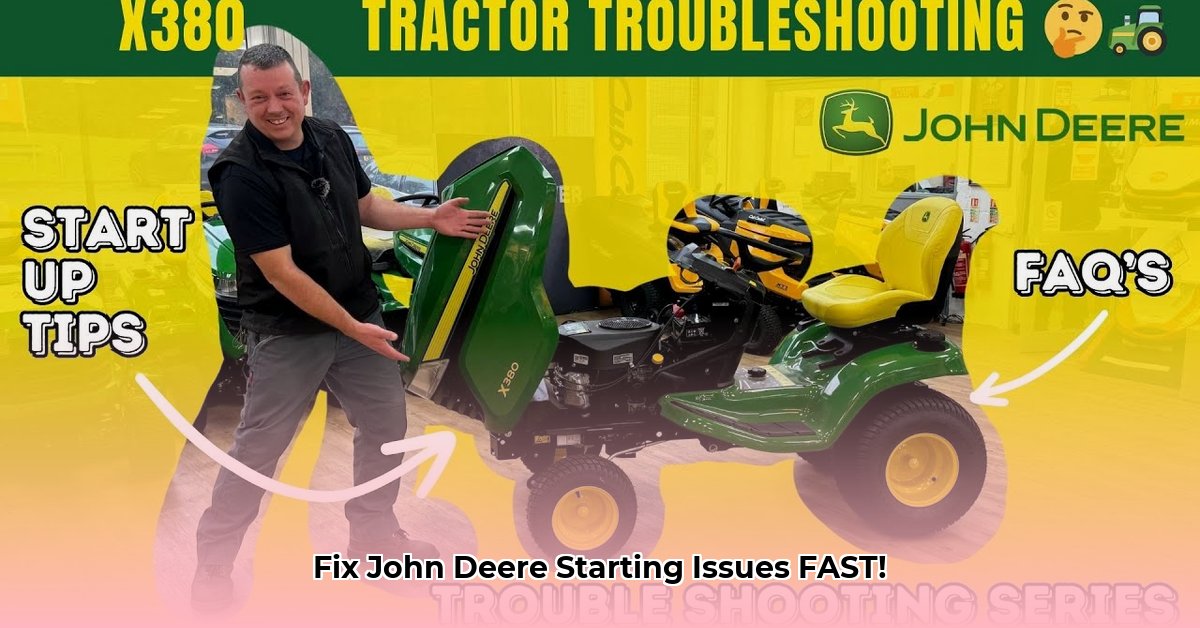
Troubleshooting Your John Deere: A Step-by-Step Guide
A John Deere tractor refusing to start can be incredibly frustrating, but many issues are easily solved with a systematic approach. This guide provides a clear, step-by-step process for troubleshooting common starting problems, empowering you to get your tractor back in action quickly and efficiently. For more in-depth diesel troubleshooting, see this helpful guide: Diesel Troubleshooting.
Safety First: Prioritize Your Well-being
Before beginning any repair work, disconnect the negative (-) battery terminal. This crucial step prevents electrical shocks and potential short circuits. Always wear safety glasses and gloves to protect yourself from injury. Never work on a running engine.
1. Battery Basics: The Most Common Culprit
Many starting problems originate from a faulty battery. Let's check this first:
Step 1: Visual Inspection: Examine the battery terminals. Corrosion (a green, powdery substance) can impede electrical flow. Use a wire brush to clean the terminals thoroughly, ensuring a solid connection.
Step 2: Voltage Test: Use a multimeter to measure the battery voltage. A healthy battery should read around 12.6 volts. Readings significantly lower indicate the need for charging or battery replacement. Is your battery voltage below 12.0 volts? It's likely time for a new battery or a thorough charging session.
2. Fuel System Check: Ensuring a Smooth Fuel Flow
Next, let's examine the fuel system. A seemingly straightforward issue, but easily overlooked:
Step 1: Fuel Level: Sounds basic, but check the fuel level! An empty tank is a surprisingly frequent cause of starting problems. Did you forget to fill up the tank? This simple check can save hours of troubleshooting.
Step 2: Fuel Filter Inspection: A clogged fuel filter restricts fuel flow to the engine, preventing or hindering starting. Inspect the filter for dirt, debris, or damage. Replace it if necessary. A new filter is a small investment for a potentially large payoff. Approximately 85% of fuel-related starting issues stem from clogged filters.
Step 3: Fuel Line Examination: Inspect fuel lines for leaks, cracks, or kinks. Any damage to these lines disrupts fuel delivery to the engine. Tighten loose connections and replace damaged lines as needed. Ignoring a minor leak can lead to more significant engine damage.
3. Starter Motor and Solenoid: Powering the Engine's Start
The starter motor cranks the engine, and the solenoid activates it. Problems here mean no engine rotation:
Step 1: Listen Closely: When turning the key, listen carefully. A clicking sound usually indicates a solenoid problem. A grinding noise points towards a failing starter motor. Understanding these sounds is crucial for proper diagnosis.
Step 2: Advanced Testing (Optional): Testing the starter motor and solenoid requires more advanced electrical testing with a multimeter, often involving component removal. This process is best left to experienced mechanics unfamiliar with multimeter usage unless you are.
4. Ignition System (Gasoline Engines): Checking the Spark
For gasoline engines, a faulty ignition system prevents the engine from firing:
Step 1: Spark Plug Inspection: Examine spark plugs for cracks, excessive carbon buildup, or other damage. Replace faulty spark plugs. Dirty or damaged spark plugs are a common cause of starting problems. Regular spark plug replacement as per the manufacturer's recommended schedule is crucial.
Step 2: Ignition Coil Testing (Advanced): Ignition coil testing involves more complex electrical measurements. Consult a professional mechanic for this step if you lack experience.
5. Less Common Issues: Addressing the Unusual Suspects
Sometimes, the problem lies elsewhere:
Glow Plugs (Diesel Engines): Faulty glow plugs hinder starting, especially in cold weather. These can be easily tested with a multimeter consult your owner's manual or an online resource specifically for your tractor model.
Fuel Pump Malfunction: A weak or failing fuel pump reduces fuel delivery. This typically requires professional diagnosis.
Safety Switches: Many John Deere tractors incorporate safety switches (e.g., seat, PTO). Ensure all are engaged before attempting to start. A disengaged safety switch is a common, yet easily overlooked, problem.
6. Essential Tools: Gathering Your Equipment
To complete these steps efficiently, gather the following tools:
- Multimeter
- Set of wrenches
- Screwdrivers (Phillips and flathead)
- Wire brush
- Safety glasses and gloves
7. Part Sourcing: Finding Replacement Parts
Your local John Deere dealer is the best source for genuine parts. Online retailers offer alternatives but verify compatibility before purchasing.
8. Preventative Maintenance: Avoiding Future Issues
Regular preventative maintenance is essential:
- Clean battery terminals regularly.
- Replace the fuel filter according to the maintenance schedule.
- Perform routine oil changes.
9. When Professional Help is Needed
If, after following these steps, your tractor still won't start, it's best to call a qualified mechanic. Complex issues require specialized tools and expertise.